01CAD, choreographed
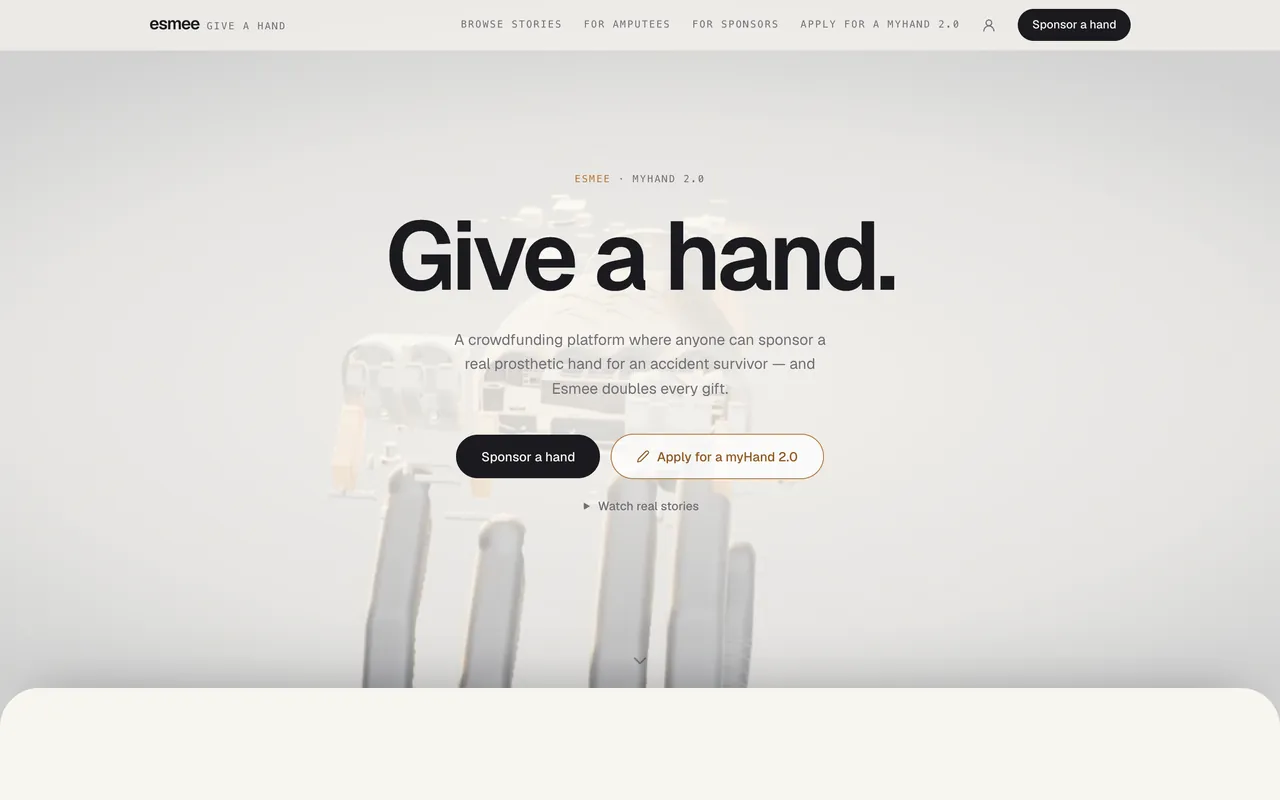
The client supplied an engineering assembly, not a web model: 3.88M triangles in 125 loose parts. I wrote a script to separate, name and normalise them, then give each part a radial vector out from the arm spine, a deterministic per-part hash for how far it travels, and a delay of its normalised X position times 45 frames. The hand comes apart wrist to fingertip and reassembles in the same direction, and the choreography is parameters rather than hand-placed keys, rendered in Blender 5.1 on EEVEE.
02241 frames, not a video element
Browsers seek, hold and drop frames when a video is scrubbed, so in the first build I exported the hero clip to 241 WebP stills and drew them to a canvas, one frame per scroll position. They load coarse to fine, every 16th then 8th, 4th, 2nd, all, twelve at a time; if the exact frame has not arrived the canvas draws the nearest one it has rather than stalling. I map scroll through an inverse smoothstep, because the clip is dark at both ends and the clasp in the middle is the part worth dwelling on.
03Built, then shelved
Both builds lost their centrepiece. The first carried a complete React Three Fiber scene, about 240 lines driving a 1.4 MB Draco hand decimated from 3.89M triangles to 150k, with a seven-bone rig and a grip loop. I cut it for reading generic beside a filmed clip, and cut the second build's 560vh pinned scroll film too, replacing it with an assembly loop where every part returns to its exact starting position and the arm turns exactly once per cycle, so there is no visible restart.
04Deleting the numbers the mockups came with
The supplied mockups carried platform stats: 47 hands sponsored, 312 waiting, $284K raised, nine countries. On a site with no applicants yet all four would have been untrue, so I replaced them with four facts true from day one, and stripped unverified device claims sitewide. Stock photography is atmosphere only and labelled as illustrative, the sponsor page states outright that the prosthesis pictured is not a myHand, and I wrote the rules into a credits file so they survive later edits.
05The applicants have one hand
In-browser recording assumes a working camera and the dexterity to hold a device steady while operating it, so I made it one path rather than the path: uploading an existing file sits beside it as an equal option, every control is a single large tap target, and nothing needs a drag or a long-press. Nine screens autosave to a draft with the password stripped, focus moves to the new heading on each step, and I replaced the mockups' CSS radio-tab trick with real ARIA tablists so panels are announced correctly. My own audit later caught where that discipline stops: below 880px the dashboard shell stacks its sidebar above the content, so a tab tap changes nothing visible.